
Carbon-Injected Concrete: What It Means for Your Contracting Business
By 3 min read

Many governments and organizations are seeking to reduce their carbon footprint. For a lot of people, that means changing the way they think about concrete. Cement, an important component of concrete, is known for its high rate of carbon emissions. A recent innovation is allowing companies to inject carbon into concrete, to create a carbon sink that never releases emissions into the atmosphere. Here’s how it works, and what it might mean for your contracting business.
What Is Carbon-Injected Concrete?
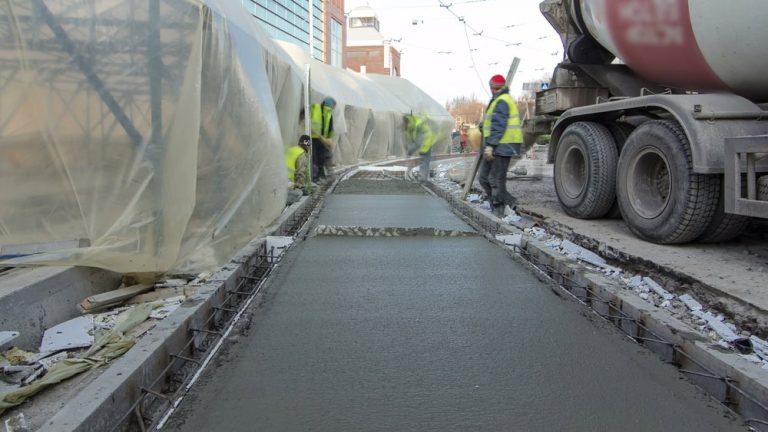
Injecting carbon into concrete happens during the mixing process. A company captures carbon emissions and converts them into a liquid. That liquid carbon dioxide is mixed in with the wet concrete. The carbon adds volume to the paste, which decreases the need for more cement. Once it dries, it looks and functions much like traditional concrete. The most obvious difference is that there is a higher amount of solid carbon.
How Does Carbon-Injected Concrete Act as a Carbon Sink?
During mixing, the carbon binds to calcium. This creates calcium carbonate, which gradually hardens into a mineral. Essentially, carbon-injected concrete features millions of tiny rocks. These minerals aren’t going anywhere. Even when the concrete breaks down as part of demolition, the molecules remain intact. This means that carbon-injected concrete is not just cutting down on cement use. It takes recaptured carbon emissions and converts it into a form that doesn’t off-gas or release those carbon atoms in the future.
How Does It Compare to Traditional Concrete?
One reason that standard concrete continues to be king in construction is that it has been hard to replace. It’s strong, durable and effective. Any alternative needs to meet that criteria without being significantly more expensive or hard to find. Otherwise, people are less likely to adopt it as a practice.
Research indicates that carbon-injected concrete has a strength and durability similar to traditional concrete once it has about a month to properly cure. Of course, using recaptured carbon costs money and requires access to options nearby that provides that service. But many businesses that have employed this technology have indicated that lower costs for cement based on lower consumption has made it an economically-viable choice.
Why Does the Construction Industry Care About Carbon Emissions?
Getting in on green technology is more than just a fad. Trying to change up your processes to make them more efficient and less wasteful is a wise business practice. There’s a lot of potential for businesses that can reduce carbon emissions. And when it comes to cement as a major contributor to the problem, the construction industry controls a significant share of the responsibility. Dramatically cutting back on the amount of cement you use as part of your contracting business could be the equivalent of taking tons of cars off the road, without a decrease in the quality of the products you produce.
What Does This Mean for Contracting Businesses?
Considering options that decrease your company’s carbon footprint is not just good for the environment. It can be good business, too. Carbon-injected concrete is a relatively new technology, which means that you might have a hard time finding it near you at the moment. But interest in the technology is growing, especially in parts of California where pollution is a big problem. If you keep your eye on the latest developments in green technology, you’ll be able to learn more and decide which ones are best for your business. Showing potential clients how you work to make your contracting business sustainable can also make people more likely to choose yours over your competitors, too.
Every year, you’ll see new technologies that try to solve the problems of the less-sustainable parts of construction. Carbon-injected concrete poses a lot of interesting ideas that you might be able to use for your contracting business, in time. To learn more about how you can take advantage of the new developments in construction, contact CSLS today!