

5 Things to Put in Your Contracting Business First-Aid Kit
By 3 min read
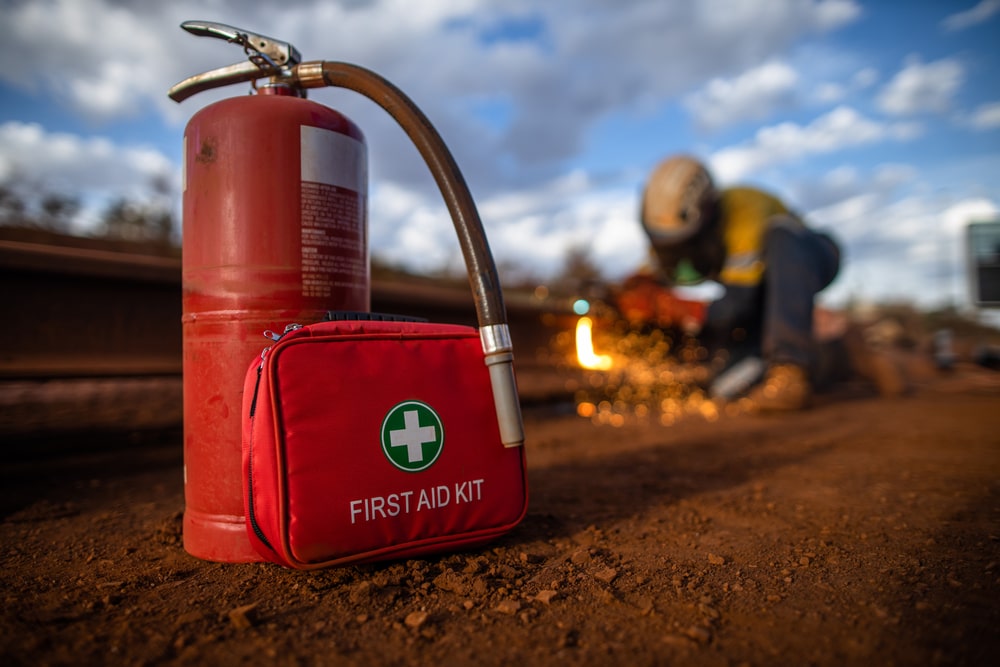

Accidents happen on the construction site, and it’s important to be prepared. While you might not be able to address everything, having a good first-aid kit is key to managing minor injuries. Here are five things that you should keep in your first-aid kit, to help you keep working or to buy you time until help arrives.
Protective Gear
You wouldn’t work with hazardous materials on the construction site without protective gear, and you need to include that in your first-aid kit too. Blood and other bodily fluids can be hazardous for a variety of reasons. If you want to prevent the spread of infection, you’ll need protective tools like:
- Disposable nitrile gloves
- Protective eyewear
- Surgical masks
You might not need all of these for a simple scrape. But if someone on your team encounters a hazardous substance, you may need additional gear to ensure that you do not become a victim as well.
Sanitation Supplies
You should plan to add a few sanitation supplies, for the person performing the first aid as well as the person who needs help. The last thing that you want to do is to put a clean bandage on a dirty wound. This situation makes it harder for the body to expel debris or toxins, without removing them. Start by making yourself clean enough to provide assistance. Consider a small disposable bar of hand soap if you have access to water. In a pinch, hand sanitizer is better than nothing. You need these tools, even if you’re planning on putting on a pair of gloves before you begin. You may also want antiseptic wipes or a source of clean water for rinsing the wound. A CPR barrier can help you prevent transmitting active infections from one person to another. If you have room, add more than one set of these items.
Bandages
For most minor injuries, you’re probably going to need bandages. It’s a good idea to buy a package of self-adhesive bandages in a variety of sizes for minor cuts and burns. You may also want to add the following:
- Gauze squares
- Absorbent gauze pads
- Sterile adhesive tape
- Fabric wraps for splints
As far as you have room, try to give yourself flexibility in sizing. That way, you’re not using all of your small bandages on one long cut.
Antiseptic Ointment
It’s common to add a small amount of antiseptic ointment on a bandage, as a way of keeping the wound clean and free of infection. You can buy packets of ointment that you can open, distribute and throw away. Keep in mind that experts have mixed views about the use of antiseptic ointment. Some experts argue that overuse of antiseptic ointment can irritate the skin or cause contact dermatitis. In short, you may not need to use it for every application, but it’s not a bad idea to have it on hand.
Basic OTC Medicines
Having a few over-the-counter medications can help when the problem isn’t necessarily on the skin. If you’re going to keep OTC medications in your first-aid kit. It’s best to use single-serve packages. These items have a single dose in each pack, with all the relevant information printed on the outside. Be sure to consult OSHA requirements for the medications. Although it might seem logical to give antihistamines to someone dealing with an allergic reaction, these medications can make a person too drowsy to work safely. When in doubt, it’s better to send someone to seek medical attention, instead of inadvertently giving them the wrong medication on the job site.
Keeping the members of your team in good working condition is an important part of running a business. To learn more about what you’ll need to start a contracting business, visit CSLS today!