
Got Some Tile Work To Do? Make Your Life Easier
By 4 min read
[vc_row][vc_column][vc_single_image image=”30949″ img_size=”full”][/vc_column][/vc_row][vc_row][vc_column][vc_column_text]Tile installations can be pretty tricky. Whether you own a tile business or are just doing one-off remodels, tile work can turn into a nightmare in a hurry. Tile experts know that the craftsman is only as good as his or her set of tools. The proper tools help speed along installs, create cleaner finished products, and make your life easier. In the list below, we’ll detail some tile tools and tips that are guaranteed to make your next tile installation a breeze.
Rubber Buckets: Quite possibly the simplest item on this list, good quality rubber buckets simplify your mortar mixing. Unlike traditional pails, rubber buckets take a beating, are easier to clean, and can be used for other materials. A good set of modular buckets is worth it for mixing different colors and consistencies, so you can keep your materials separate but not slow down the process.
Trowels: There are a lot of different trowels out there that do specific things. Knowing which trowel to use based on your mortar type and ridge height will make your tiling easier. Be sure to check which size fits your project, and whether the trowel is aluminum or stainless steel. Also, trowels with heavy duty handles allow you to hang it from your bucket so you don’t have fish it out when you only have one hand.
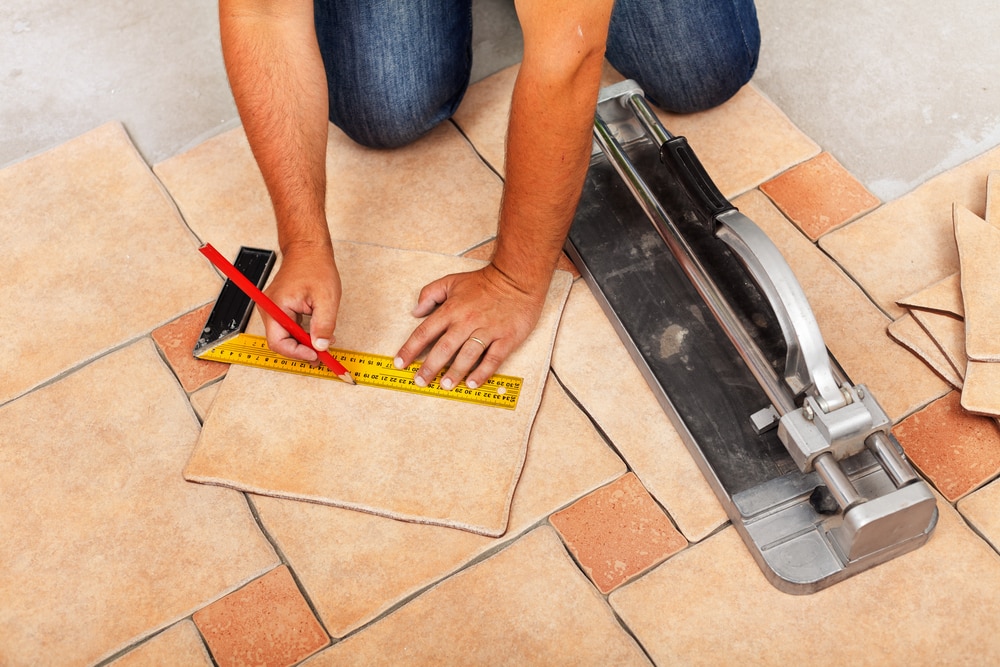
Manual Tile Cutter: When you lay tile, you need a tile cutter that makes accurate straight and diagonal cuts. Proper tile cutters will score and cut tiles so the edges will line up when installed. Be sure to find a tile cutter with angle guides that help you with common cuts. A good-quality unit is also key for glass or mosaic tiles that have delicate top surfaces. The right cutter will not damage the tile surface.
Tile Drill Bits: Cutting holes in tile can be frustrating if you don’t have the right tools. You will need tile-specific drill bits that typically only last around 20 cuts. Tile drill bits should have some sort of coated tip that cools the tile as it is being cut and protects the bit for prolonged operation. Drill bits with lateral openings help remove tile residue and debris from the hole so you don’t foul the cut.
Tile Installation Kits: Laying a flat, level tile floor is really an art form – it is a lot harder than it looks. Installation and leveling kits make the task easier, allowing you to custom-fit tile consistently. Things like tile strips will ensure proper mounting and grout joint width. Quick caps simplify the job, just snap on the cap and you’ll no longer have peaks and valleys.
Tile Spacers: Removable, reusable tile spacers are essential to maintaining the correct linear spacing. Modular spacers are also useful when changing to another tile pattern in an area where the dimensions change. Regular spacers, T-spacers, and wedges should be in every tile installation arsenal. They will save you a ton of time and guesswork. Reusable spacers can be taken from jobsite to jobsite if you’re a commercial tile installer which makes them key in the installation process.
Grout Floats: When it comes to the finishing touches, grout is the final aesthetic filler between tiles that completes the look and feel of fresh tile. Grout floats are the tools that fill and smooth excess grout away from the tile surface for a uniform seam. There are many different grout floats available depending on the tile material. Softer rubber floats are great for natural stone or textured tiles, while more rigid floats are useful for removing excess grout, like a putty knife for spackle. It’s important to know what type of tile and grout works with what float. The last thing you want to do is lay tile and damage the surface while applying grout.
The above tools will really help you out with the details when it comes to tile. There’s so many options when it comes to tools, types, and their uses that even the seasoned tile contractor can be stumped every now and then. Learn more about tile installations and the secrets with CSLS’ C54 Ceramic and Mosaic Tile Course today.
About CSLS:
CSLS is the largest contractor licensing school in California with over 25 locations throughout the state. We have the highest success rate of any school – 99% of our students pass their exam on the first try, and that’s guaranteed or your money back.
Our teaching process prepares you in a step by step manner for everything you need to know to pass the law, business and trade portion of your exam. Our programs are designed for convenience. We have online programs, home study, crash-course and in-school options, making it easy and affordable for you to become a licensed contractor. [/vc_column_text][/vc_column][/vc_row]